
Last updated: September 2026 · Method: desk research from documented Marwar history (court records, established histories). Dates are the standard chronology; the names recur across every sight on this site.
Every guide you’ll read in Jodhpur name-drops a Rathore ruler — Jodha, Jaswant Singh, Ajit Singh, Umaid Singh. This timeline assembles them in order, so the city’s monuments stop being a list of names and become a story: five centuries of one dynasty, told through what each of them built.
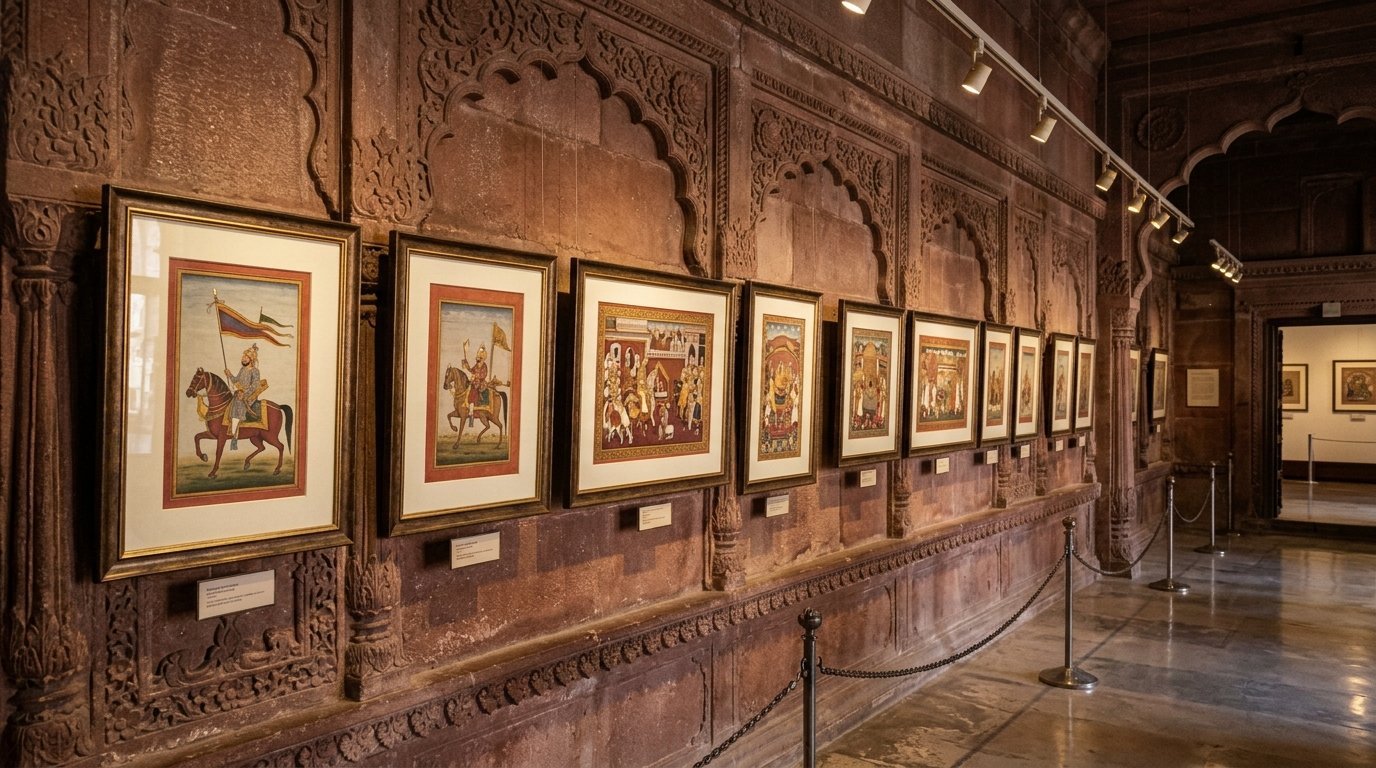
The timeline
- 1459 — Rao Jodha founds Jodhpur. Pushed from Mandore, the Rathore chief crowns a hilltop and begins the fort the city is named for (Mehrangarh means “fort of the sun”). The Mandore Gardens hold the dynasty’s earlier cenotaphs.
- 15th–16th centuries — the fortress centuries. Rao Bika heads north to found Bikaner (the cousin city); Marwar fights Mughal expansion, yields, and bargains.
- 1595–1678 — the Mughal alliance era. Marwar’s rulers serve the Mughal court at high rank — the era that fills Mehrangarh’s palanquin and armoury galleries.
- 1678–1707 — war with Aurangzeb. Maharaja Jaswant Singh dies; Aurangzeb tries to absorb Marwar; Durgadas Rathore’s defiance becomes the stuff of folk song — and the marble cenotaph later memorialises Jaswant Singh.
- 1707–1723 — Ajit Singh’s return and revenge. The smuggled-back heir reclaims Marwar after Aurangzeb’s death; his cenotaph dominates Mandore.
- 1740s — the arts and water era. Toorji’s queen commissions the stepwell; the tanks and gardens that made the desert capital liveable take shape (the Gulab Sagar among them).
- 1818 — alliance with the British. Marwar becomes a princely state under British protection — the era that ends at temples and the colonial-era gardens.
- 1929–1943 — Umaid Singh builds Umaid Bhawan. The Art Deco palace as famine-relief employment: thousands of workers, a new palace quarter, and the last great palace built in India (see the palace guide).
- 1949 — Marwar joins independent India’s Rajasthan. The royal house remains: still resident in Umaid Bhawan’s private wing, still custodians of Mehrangarh through the fort’s Trust.
Walking the timeline
The city arranges itself chronologically if you know the key: Mandore is the pre-Jodhpur chapter, Mehrangarh and the old city are the 15th–18th centuries, and Umaid Bhawan is the 20th. Our itinerary runs the story in order without saying so — now it will say so for you.
Questions worth asking
Why “Marwar”?
The kingdom’s older name — the land of Marwar, “the region of death” in some etymologies, a testament to its hardness. Jodhpur was its new capital; the region’s name outlived the capital’s founding.
Related guides
Spot a date or a name to correct? Send it — history pages improve by challenge.