Last updated: November 2026 · Method: research-based — compiled from official sites, reviews and trusted local sources; figures approximate — verify on site.
style=”display:none”>

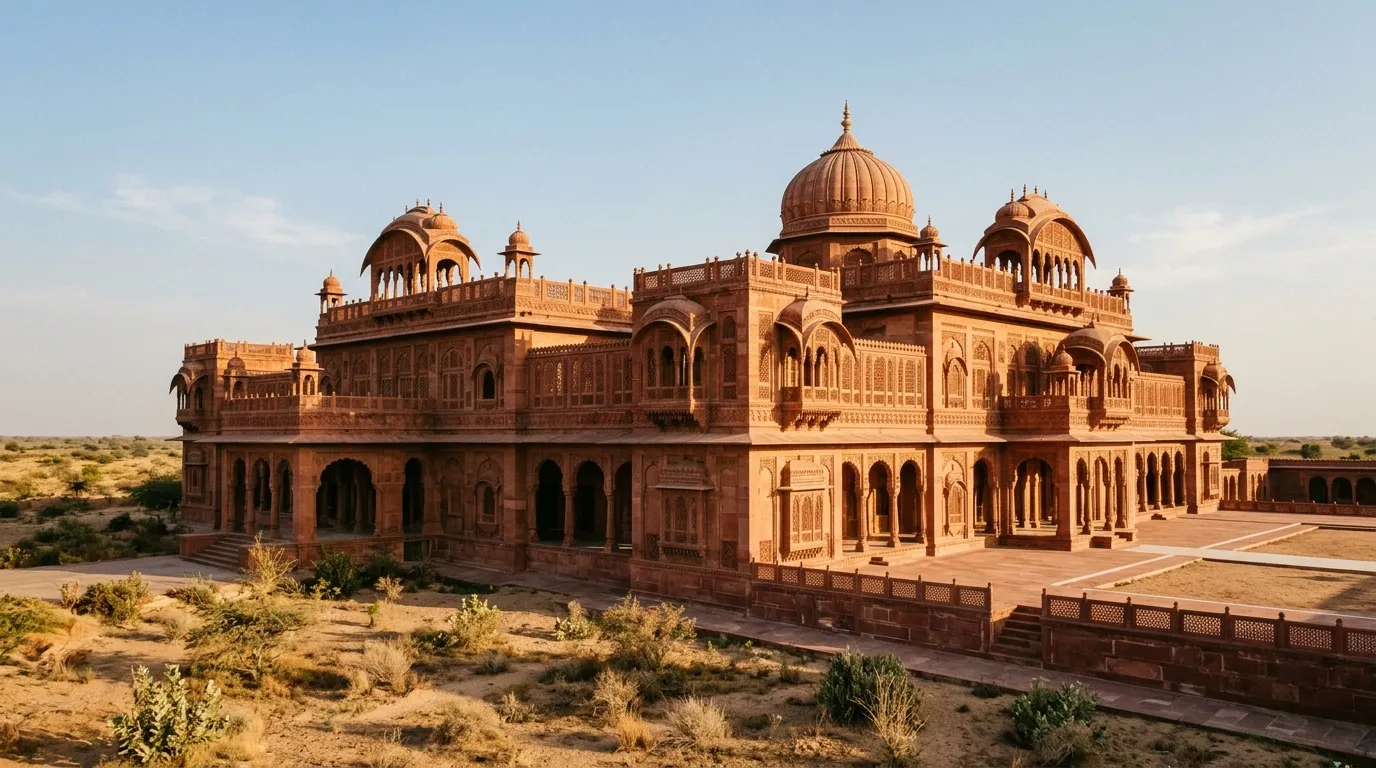
Lalgarh Palace is Bikaner’s other palace — the red-sandstone Indo-Saracenic complex built for Maharaja Ganga Singh in the early 1900s, with filigree work of a delicacy the forts never attempted. Part museum, part heritage hotel, part still-royal-residence: this guide decodes which parts a visitor can enter.
| Item | Detail |
|---|---|
| Location | 3–4 km from Junagarh — a short auto ride (the day plan pairs them) |
| Access | Split property: the Sadul Singh Museum wing (open to visitors, small fee — verify hours) and the hotel wing (Lalgarh Palace Hotel — guest/dining access); parts remain the royal family’s |
| Time needed | 60–90 minutes for the museum wing |
Verification: figures on this page are research approximations — check current details on the Rajasthan tourism OBMS portal (monument tickets), Rajasthan Tourism before you travel.
For the traveller assembling the wider itinerary, the pages linked above hold the connections that make this stop part of a working route rather than an isolated visit, and the season chosen first, the transport resolved second, the expectations calibrated by the guides above, and the water bottle packed are the planning items that convert every stop into its best version, which is the outcome the preparation serves. The practical close follows the desert’s standard: the water carried, the entry verified at the counter, the opening hours checked against the day of the visit rather than the guidebook’s print date, and the visit running on its own terms. The traveller who follows these habits reports the visit as handled rather than harried, the preparation being the difference that the reviews consistently credit, and the linked guides supplying each layer’s detail so the traveller never arrives without the context the site deserves.
Lalgarh Palace (1902–1926, built for Maharaja Ganga Singh) is Bikaner’s architectural showpiece — the red-sandstone Indo-Saracenic pile whose courtyards, lattice-work and the British-Rajput hybrid interiors carry the state’s early-20th-century confidence. The visit’s structure: the Sadul Singh Museum wing (the palace rooms open to the public — the Ganga Singh photographs, the trophies, the royal documents; ₹50–100 entry), the hotel wing (the palace operates partly as a heritage hotel — the gardens and terraces open to guests), and the lalgarh facade walk (the exterior’s carving detail — the jharokhas and the fresco fragments). The photography: the golden-hour facade from the gardens is the frame; the interiors’ low light needs the fast lens. One hour minimum; the museum’s Ganga Singh story explains modern Bikaner’s whole infrastructure confidence.

 Which Day to Visit Khichan: The Week’s Crowds and Calm→
 What the Facades Say: Reading Phalodi’s Mansion Decoration→
 RIFF: The Rajasthan International Folk Festival at Mehrangarh→
 Siddhnath Temple: The Rock-Cut Shiva Hill of Jodhpur→
 Tipping in Jodhpur: Who, How Much, and When It’s Not Expected→
 Pokaran with Elderly Parents: The Comfortable-Version Plan→