Last updated: November 2026 · Method: research-based — compiled from official sites, festival programmes and traveller reports; figures approximate — verify on site.
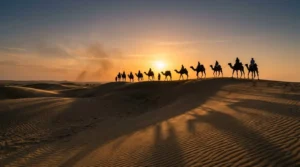
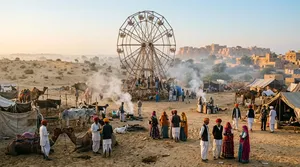
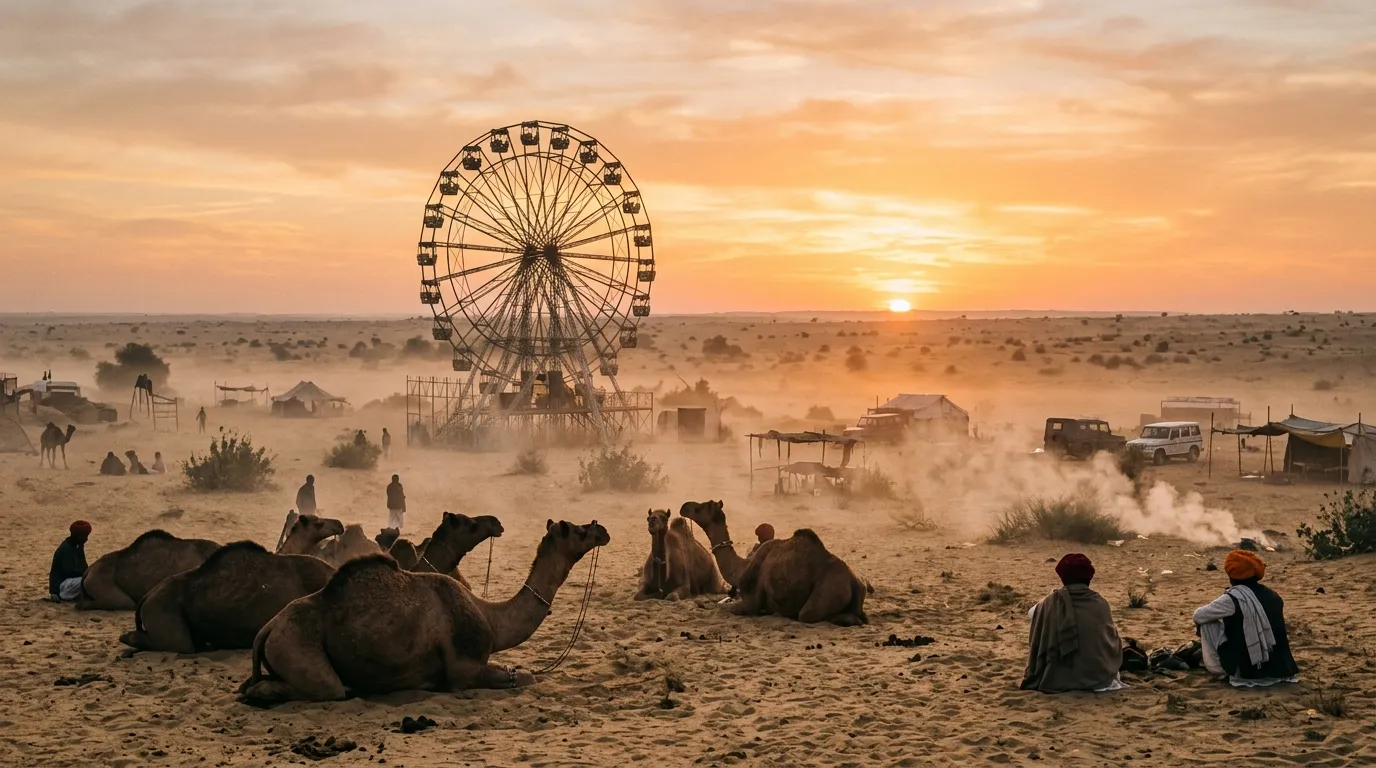
The Bikaner Camel Festival is the city’s January signature — two days of camel processions, races, folk performances and the famous camel-beauty pageant against the Junagarh walls and the dune edge. It is the camel capital at full display, government-run, and smaller than Pushkar’s fair — which is exactly its appeal. Here is what happens, and how to attend it well.
Quick facts
| Item | Detail (verify the year’s dates — typically January) |
|---|---|
| Organised by | Rajasthan Tourism; venues shift between the fort grounds and the dune edge |
| Entry | Mostly free viewing; some events ticketed — verify the year’s programme |
| The programme | Decorated-camel processions, races, tug-of-war (camel vs men), folk dance evenings, and the finale fireworks |
What the two days look like
- Day one — the procession. The decorated camels parade in the morning: jewellery, bridles and fur-cuts judged as moving art. The afternoon runs the stadium competitions; the evening carries the folk dance programme under the fort lights.
- Day two — the races. Camel races (faster and funnier than expected), the tug-of-war between camels and men, more competitions, and the fireworks close. The dedicated-photography golden hour happens both mornings at the grounds.
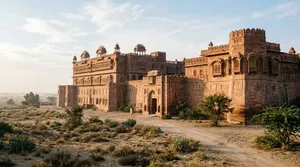
- The fringe: handicraft stalls, the camel-milk ice cream counters, and the city’s regular sights — Junagarh Fort and the rest — running alongside.
Attending honestly
- Book rooms weeks ahead; the festival is Bikaner’s peak (the stay zones fill, and rates climb through the fortnight).
- The photography is the prize; the decorated camels at golden hour are unmatched frames — the people-rules apply to handlers and performers.
- Animal-welfare eyes open: the festival is government-run with oversight, but keep the same standards you’d apply anywhere — enjoy the spectacle, decline anything that looks wrong.
- Pair it: the camel-milk ice cream, the merchant quarter and the winter guide’s packing notes complete a themed two days.
Questions worth asking
Bikaner’s festival or Pushkar’s fair?
Different spectacles: Bikaner is the intimate government-run camel showcase (two days, stadium format, thinner tourist crowds); Pushkar’s fair is the vast trading-and-pilgrimage event with the bigger name. Camel purists and photographers often do both — they’re a shared-bus-distance apart in different months.
Is the festival family-friendly?
Yes — daytime competitions are family territory; the evenings run loud. The grounds are stroller-difficult (dust, dune edges), so carriers beat prams.
What should I book first?
The hotel, then transport into Bikaner for those dates — the festival fortnight is the one period the city fills. Everything at the grounds themselves runs on the day.
Related guides
- Camel Festival 2027: dates and planning
- Bikaner in winter: the seasonal guide
- Bikaner sightseeing: fees and timings
- Pushkar’s fair: the comparison
Attended it? Tell us the year and the highlight — festival reports are this page’s annual refresh.
Pairing with the Bikaner circuit
The camel festival anchors a two-day Bikaner visit: the festival days carry the camel spectacle, and the non-festival hours cover the city’s own attractions — Junagarh Fort, the Rampuria haveli cluster, the Karni Mata temple at Deshnoke, and the bhujia shopping circuit. The fort-adjacent hotels fill during the festival; book the January dates weeks ahead.