Last updated: October 2026 · Method: research-based — compiled from official sites, reviews and trusted local sources; figures approximate — verify on site.
style=”display:none”>

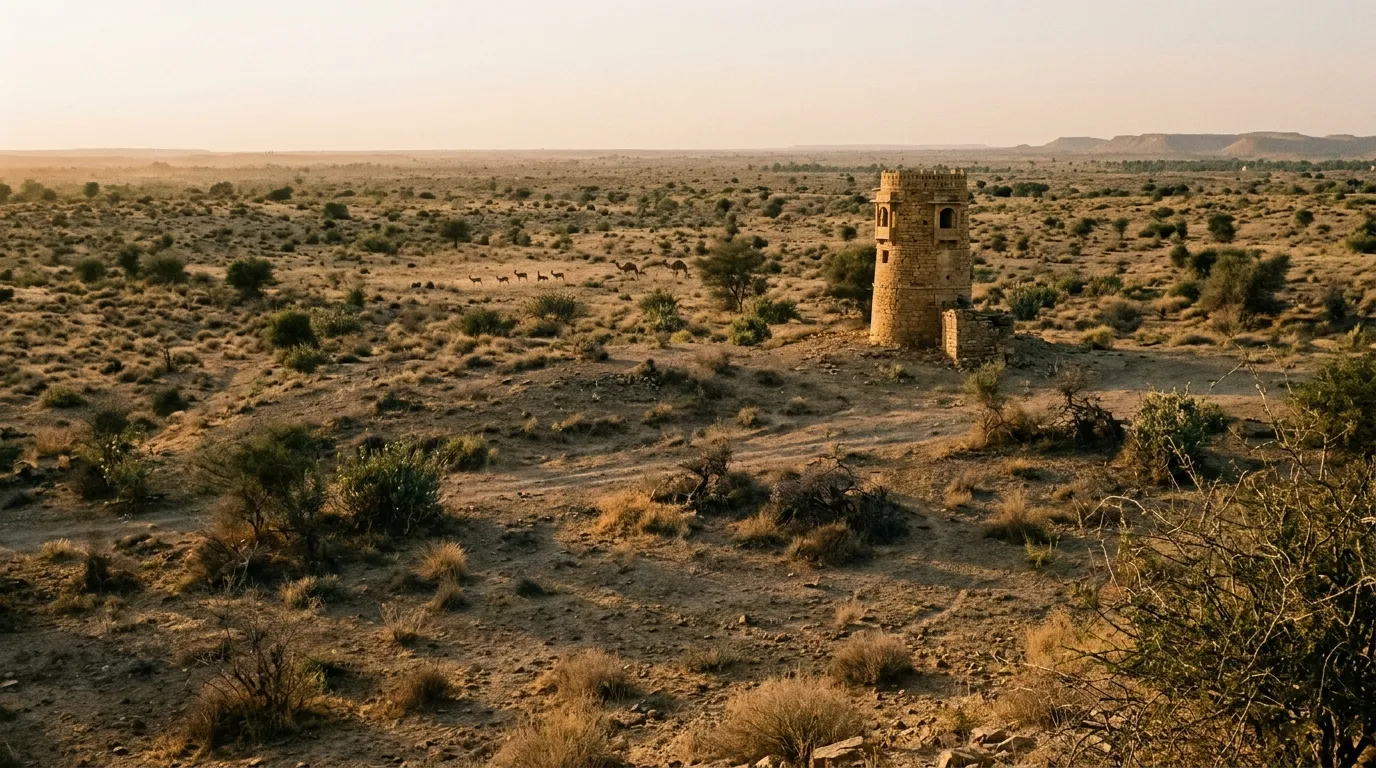
Akal Wood Fossil Park is Jaisalmer’s geological oddity , 180-million-year-old tree trunks turned to stone, lying in the open scrub of a park that marks when this desert was a coastal forest. It is a small, cheap, genuinely surprising stop, and the museum inside explains the deep time the landscape hides.
| Item | Approx (verify at entry) |
|---|---|
| Location | ~17 km from Jaisalmer, 1 km off the Jaisalmer–Barmer road (a short detour from the Sam direction , verify the turn-off) , the natural stop en route to the dunes |
| Entry | A nominal fee (maintained by the Rajasthan Forest Department (the GSI ran it until 1985, per published accounts)) , verify current |
| Time needed | 30–45 minutes |
A stop, not a destination, thirty honest minutes that enrich the dunes trip on the same road. Skip nothing else for it; just don’t skip it.
Verification: figures on this page are research approximations , check current details on the Rajasthan tourism OBMS portal (monument tickets), Rajasthan Tourism before you travel.
For the traveller planning the visit, the practical sequence holds: the timing chosen from the season’s calendar, the entry or transport confirmed ahead, and the expectations set by the pages above rather than the brochure’s photography. The stop rewards the visitor who arrives prepared, and the preparation is an hour of reading that the visit repays in a day of understanding. The linked guides hold the wider circuit, and the traveller who follows the connections builds the itinerary that the geography supports rather than the one the guidebook imposes, which is the honest design behind every page on this site.
The practical close follows the desert’s standard: the water carried, the entry verified at the counter, the hours checked against the season’s daylight, and the visit running on the plan’s own terms. The traveller who follows these habits reports the visit as handled rather than harried, the preparation being the difference the reviews consistently credit.
The season’s calendar, the transport’s booking, the entry’s verification and the water’s carrying are the four items that every stop on this route demands, and the pages linked above hold each one’s detail, the traveller who reads them before arriving reporting the visit as prepared rather than improvised, the difference showing in the morning’s pace and the afternoon’s energy. The practical close follows the same standard: the water carried, the entry verified at the counter, the photography asked before taken, the season’s timing checked against the visit dates before the rooms are booked, and the framing maintained throughout , the preparation being the trip’s quietest insurance, and the linked guides supplying each layer’s detail so the traveller never arrives without the context the stop deserves.
And the honest close: the stop rewards the traveller who arrives with the practical details already handled, the season’s timing chosen from the linked guide, the transport confirmed before the departure, and the expectations set by the pages above rather than by the brochure’s photography , the traveller who follows this sequence reports the visit as genuine rather than disappointing, which is the guide’s measurable purpose.

 Which Day to Visit Khichan: The Week’s Crowds and Calm→
 What the Facades Say: Reading Phalodi’s Mansion Decoration→
 RIFF: The Rajasthan International Folk Festival at Mehrangarh→
 Siddhnath Temple: The Rock-Cut Shiva Hill of Jodhpur→
 Tipping in Jodhpur: Who, How Much, and When It’s Not Expected→
 Pokaran with Elderly Parents: The Comfortable-Version Plan→