Last updated: October 2026 · Method: compiled from public listings and traveller reports; treat figures as planning aids, not quotations.
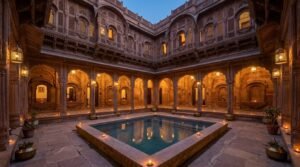
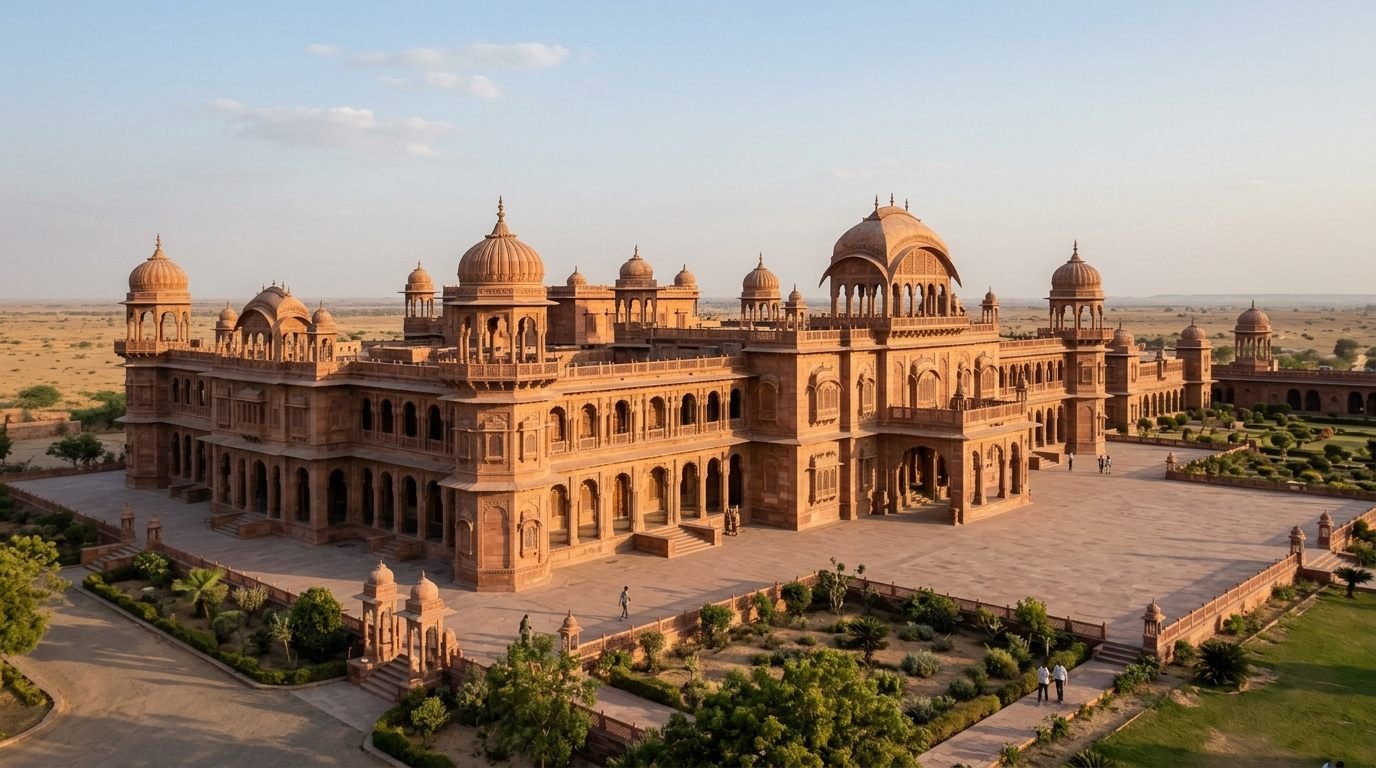
Lalgarh Palace has a named author: Samuel Swinton Jacob, the colonial-era engineer-architect whose Rajput revival defined the building. The man is the interesting half of the story: a Public Works engineer, based in Jaipur, whose pattern books documented Rajput and Mughal ornament in measured drawings and made the revival vocabulary portable across the princely states, with Lalgarh standing as his masterwork in red sandstone. The patronage is the other half, because the palace was not a colonial imposition but a commission: Ganga Singh shaped the programme alongside Jacob, and the partnership produced the filigree screens, the courtyards and the hybrid planning that make the building read as Rajput first and period second. The design’s confident symmetry, the thing the grounds walk shows off, is Jacob’s signature: an engineer’s discipline laid over a craftsman’s ornament, drawings precise enough that local workshops could execute the carving direct from the books. Read the facade as that collaboration, engineer and patron, book and chisel, and the palace becomes a document rather than a backdrop.
The filigree palace has an author: Samuel Swinton Jacob, the engineer-architect of Rajput revival.
The story
- The man: a Jaipur-era engineer whose pattern books documented Rajput detail, with the palace as his masterwork.
- Royal patronage shaped the design alongside him, most visibly in the partnership with Ganga Singh.
- See it: the grounds walk reads the design’s confident symmetry.