Last updated: October 2026 · Method: compiled from public listings and traveller reports; treat figures as planning aids, not quotations.
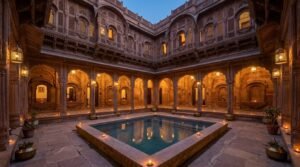
The Rampuria havelis carry their families’ stories in stone: merchant fortunes from opium, grain and rail-era trade, each house marking a different peak, and each facade a receipt for money made elsewhere. The facades of the Rampuria lanes carry surnames, and the family stories explain why each house differs.
The stories
- The trade routes: the merchant families’ money came from opium, grain and rail-era trade, and each house marks a different peak.
- The families that left for Bombay and beyond are the reason the houses stand as they do; the buildings are their receipts.
- The honest frame: lane lore mixes lineage and legend, so the legends discipline applies at every door.
The lanes make more sense as business history than as architecture. The facades belong to named merchant families, and their money came in waves: the opium trade of the earlier nineteenth century, the grain markets, and then the rail-era boom that linked Bikaner’s traders to the port cities, with each house’s size and style marking which wave paid for it. The family trajectories explain the buildings’ present state: the families that left for Bombay and further abroad locked their houses rather than sold them, which is why the lanes stand preserved and unoccupied in equal measure, the architecture holding receipts for fortunes now living elsewhere. The honest frame matters at every door: lane lore mixes lineage and legend freely, and the legends discipline applies to every story a local guide tells with relish. Enjoy the stories, verify the dates.