Last updated: October 2026 · Method: desk research across published sources and visitor reports; nothing first-hand, confirm locally.
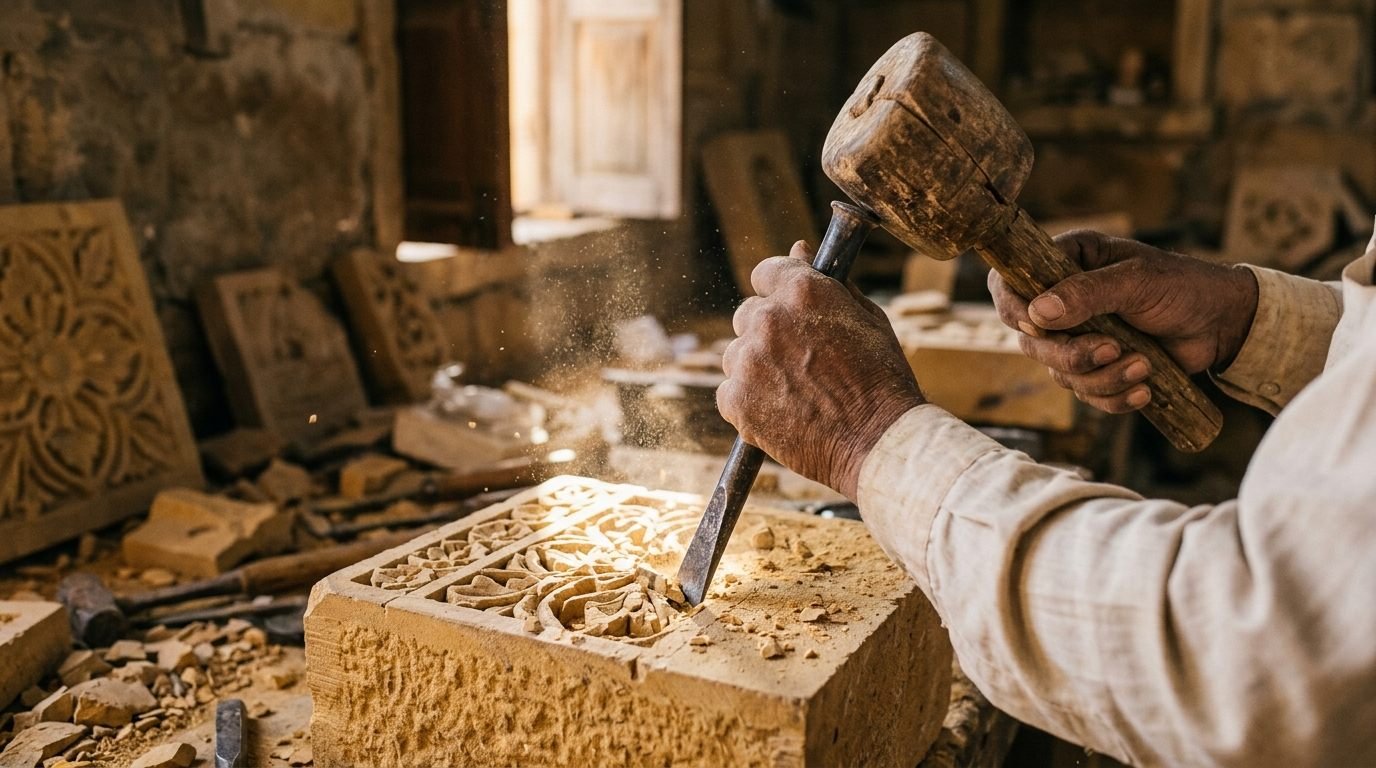
The Amar Sagar complex carries dated donor inscriptions in its stonework, and they are the most direct written record most visitors will ever stand in front of. The donors are the point of them: the merchant families who funded the tank, the temple and the stepped banks, named in carved records with their gifts, the standard endowment practice of the trading communities who built the region’s water architecture. The craft is worth a second look, because the inscription panels belong to the same carving vocabulary as the rest of the complex, with the text treated as ornament, letters worked into friezes and borders rather than pinned on as labels. The honest read is the practical one: the on-site translations and the stories attached to particular donors vary between sources, so treat the dates as the reliable element and the legend around each donor as the decorative layer, enjoyable as story rather than citation.
The Amar Sagar complex carries donor inscriptions, the stones that name the merchant families and their gifts.
What the stones say
- The donors: the merchant families who funded the tank, temple and steps in dated records.
- The craft: the inscription panels belong to the carving vocabulary, with text treated as ornament.
- The honest read: translations on site vary, so treat the dates as the reliable part and the stories as the decorative layer around them.