
Last updated: September 2026 · Method: guidance built from our food research. A dish profile.
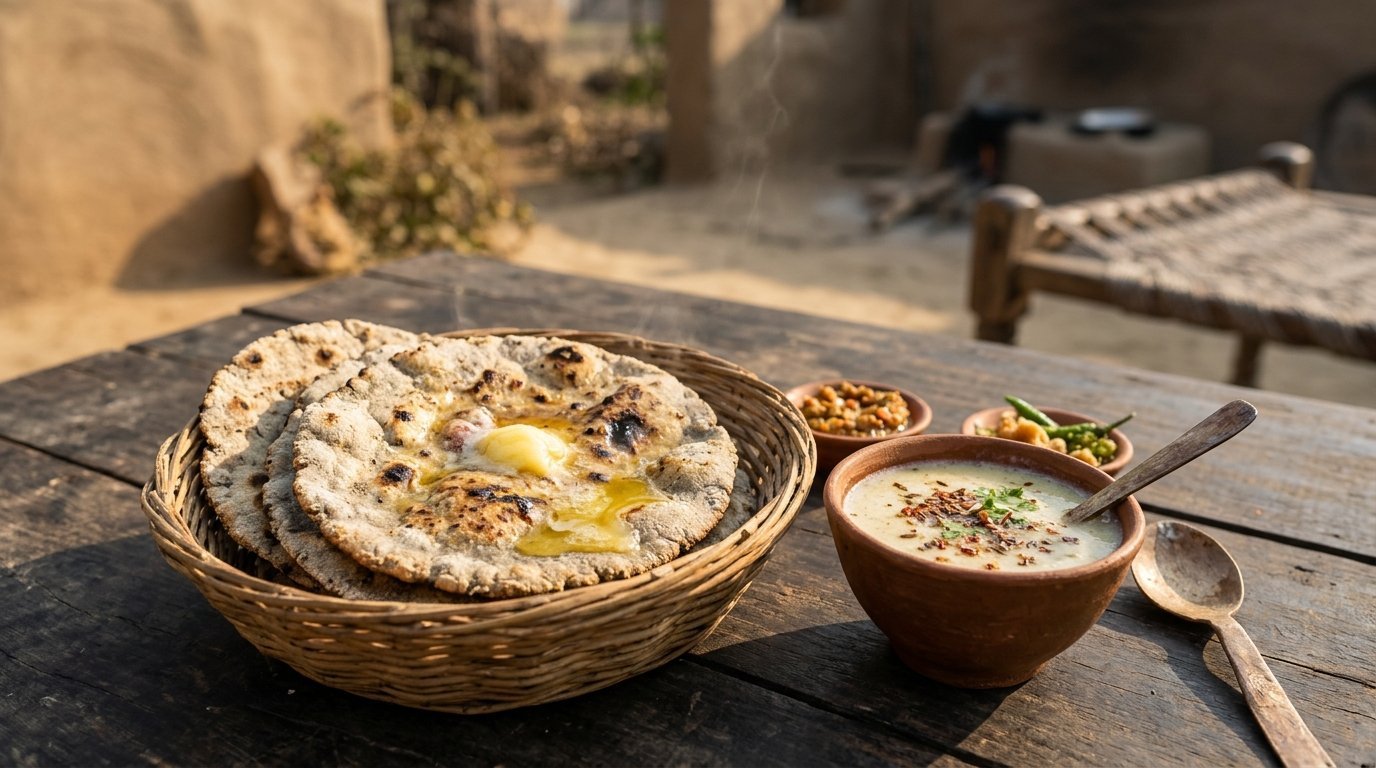
Bajra roti — pearl-millet flatbread — is the winter bread of Marwar: dense, nutty, grey-green, and designed for ghee. It’s the bread that grew where wheat struggled, and the bread that anchors every serious Rajasthani thali from October to February. Its companion, raab, is the millet porridge that old Marwar swears by in winter.
What it is
Pearl-millet (bajra) flour, kneaded hot and patted flat by hand, no rolling pin, the technique is in the palms. Roasted and then finished over coals or flame, served drowned in ghee with jaggery or alongside the dal. Raab is its liquid sibling: millet flour cooked into a thin, warming broth with buttermilk or jaggery, the old-cold-weather remedy grandmothers prescribe before pharmacies.
Where to eat it
Winter thalis at the thali houses feature bajra roti as the seasonal bread; village-country kitchens (the Bishnoi circuit’s home meals) serve it as the daily standard. Summer kitchens drop it, bajra is a “warming” grain in the food culture’s own medicine.
Questions worth asking
Why millet in winter?
The food culture treats bajra as heat-producing, a winter grain, like jowar is summer’s. Modern nutrition agrees millets are dense and slow-burning; the grandmothers were early.
Why does it come drenched in ghee?
Because dry bajra roti is a punishment. The ghee isn’t garnish; it’s the delivery system. Budget the calories and order it right.
Related guides
A bajra loyalist? Send the kitchen that makes it best, the winter bread deserves its champions.