Last updated: October 2026 · Method: research-based — compiled from official sites, reviews and trusted local sources; figures approximate — verify on site.
style=”display:none”>

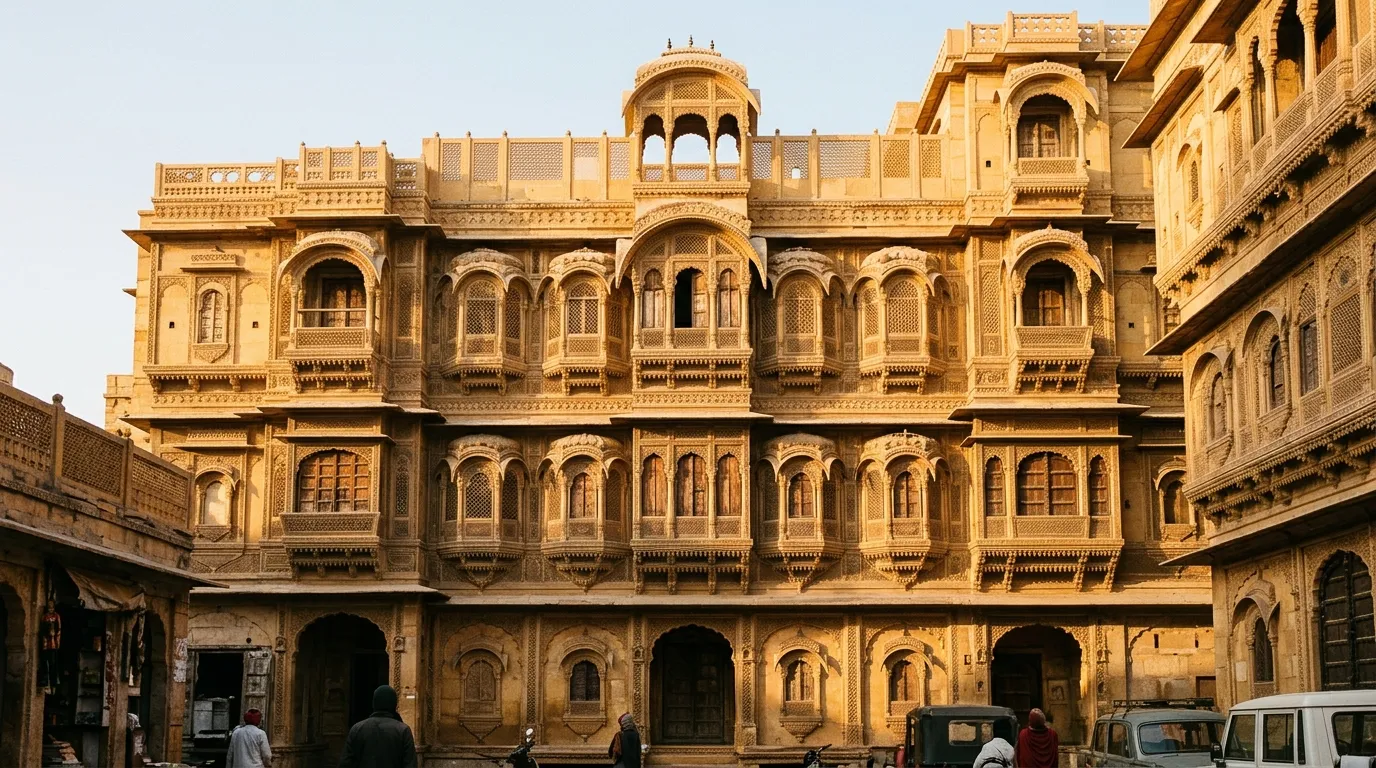
Patwon ki Haveli is the grandest of Jaisalmer’s merchant mansions , actually five adjoining havelis built across the 19th century by a merchant family whose wealth came from trade, brocade and, by many accounts, the opium trade (verify the details), with the finest jali (lattice) carving work in the golden city. If you see one haveli in Jaisalmer, the recurring recommendation lands here.
| Item | Approx (verify at entry) |
|---|---|
| Open | Daylight hours, roughly 8 AM–6 PM |
| Entry | Ticketed sections: parts of the complex run as separately ticketed museums (figures have moved to three digits for foreign visitors in some listings , verify at the counter) |
| Time needed | 45–60 minutes |
| Location | In town, below the fort , walkable from everywhere in Jaisalmer |
Verification: figures on this page are research approximations , check current details on the Rajasthan tourism OBMS portal (monument tickets), Rajasthan Tourism before you travel.
And the Patwon ki Haveli’s visiting craft, restated: the five havelis’ cluster taken in sequence, the guide above holding the detail, the carving guide supplying the vocabulary, and the traveller who walks the cluster slowly reports the haveli as Jaisalmer’s finest merchant house, and the morning visit as the correct hour for the facade’s raking light.
For the traveller assembling the wider itinerary, the pages linked above hold the connections that make this stop part of a working route rather than an isolated visit, and the season chosen first, the transport resolved second, the expectations calibrated by the guides above, and the water bottle packed are the planning items that convert every stop into its best version, which is the outcome the preparation serves.
And the practical close: the water carried, the entry verified at the counter, the opening hours checked against the day of the visit rather than the guidebook’s print date, and the visit running on its own honest terms, which is the outcome all the preparation serves. The traveller who follows this planning reports the visit as the trip’s genuine content, and the preparation as the reason the stop delivered what the guidebook described.

 Which Day to Visit Khichan: The Week’s Crowds and Calm→
 What the Facades Say: Reading Phalodi’s Mansion Decoration→
 RIFF: The Rajasthan International Folk Festival at Mehrangarh→
 Siddhnath Temple: The Rock-Cut Shiva Hill of Jodhpur→
 Tipping in Jodhpur: Who, How Much, and When It’s Not Expected→
 Pokaran with Elderly Parents: The Comfortable-Version Plan→